
Bird Nest Benefits
By The Little Nests Editorial Team·Published 21 September 2026
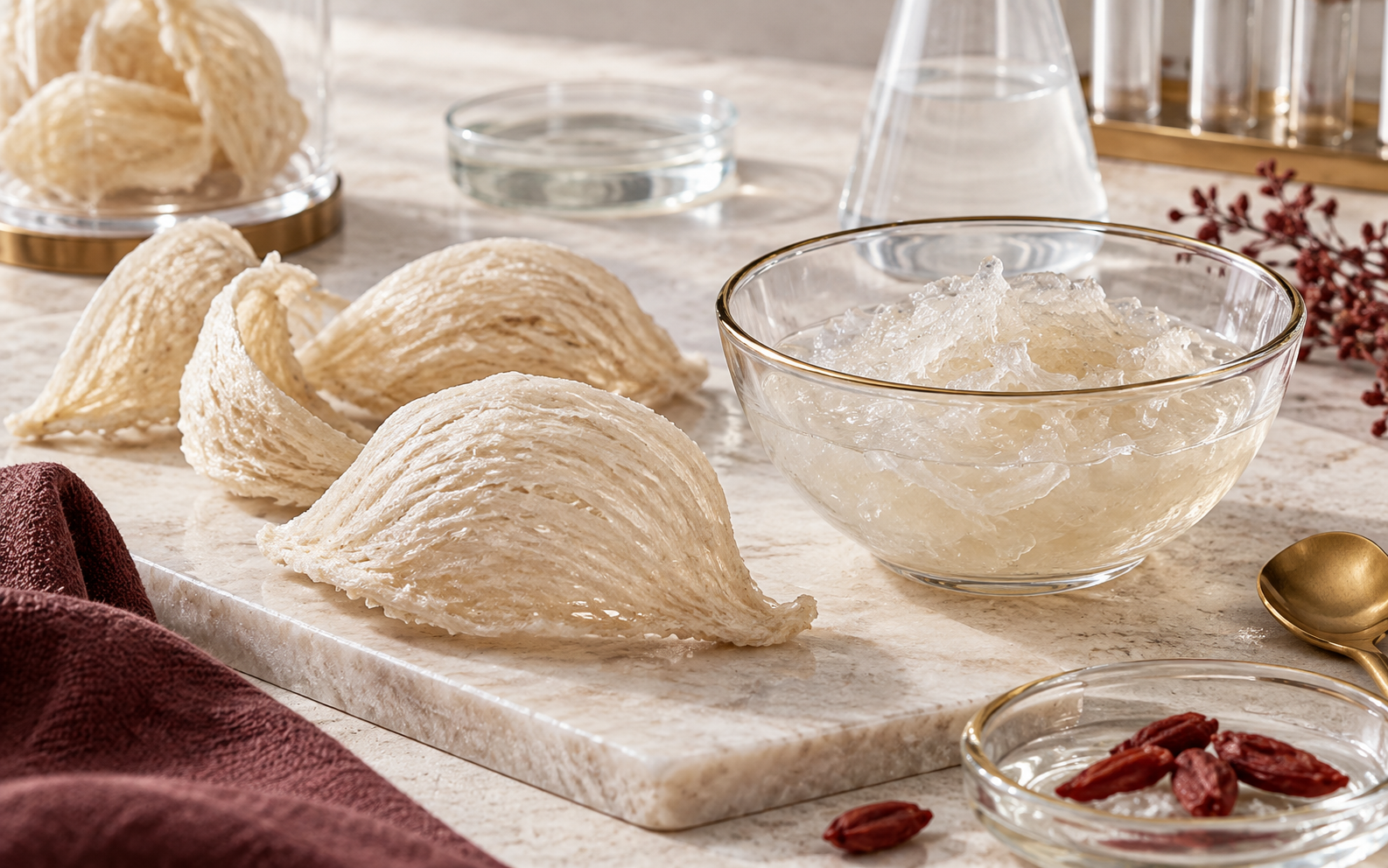
Bird’s nest contains protein, carbohydrates and sialic-acid-containing glycoproteins, but many health claims still need stronger human evidence.
Edible bird’s nest is a traditional food made mainly from swiftlet salivary secretions. Laboratory analyses commonly report protein and carbohydrates as its major components, together with glycoproteins that contain sialic acid. The exact composition can vary by origin, processing and product formulation.
Research has explored possible antioxidant, skin, immune, neurological and other biological effects. Most of the widely repeated benefits, however, come from laboratory or animal studies. Reviews continue to call for better human clinical trials. A recent controlled study in healthy women examined metabolic changes after bird’s nest intake, but this does not establish broad disease-prevention or treatment claims.
The most accurate way to describe bird’s nest is as a traditional food with nutritional components and areas of active research. It should not be advertised as a cure, an immune guarantee, a memory enhancer or a replacement for a balanced diet. Product quality, ingredient transparency, serving size and safe processing matter more than dramatic promises.
What the nutrients do and do not prove
Finding protein, carbohydrates or sialic-acid-containing compounds in a food does not automatically prove a specific health outcome. The amount available in a serving, digestion, processing and a person’s overall diet all affect how laboratory findings translate to real life. Results from cells or animals are useful for forming research questions, but they should not be presented as if they were confirmed benefits in people. Human studies need suitable comparison groups, enough participants and outcomes that matter clinically.
A practical way to evaluate benefit claims
When reading a claim, ask four questions: Was the research done in humans? Was the tested product comparable to the product being sold? Was the result a meaningful health outcome rather than a laboratory marker? Has the finding been repeated independently? If the answer is unclear, treat the claim as preliminary. This approach is especially important for statements about immunity, memory, skin, pregnancy or disease treatment, where confident advertising can go far beyond the available evidence.
Where bird’s nest can fit
People who enjoy bird’s nest can include it as part of a varied diet, provided the ingredients, sweetness and allergy considerations suit them. Choose a format with transparent serving information and follow its storage instructions. Bird’s nest does not replace vegetables, fruit, protein foods, prescribed nutrients, sleep or medical care. Its value may also come from taste, cultural tradition and the ritual of preparing or sharing food. Those are valid reasons to enjoy it without promising a result that research has not established.