
Is Bird Nest Good for Pregnant Women?
By The Little Nests Editorial Team·Published 21 September 2026
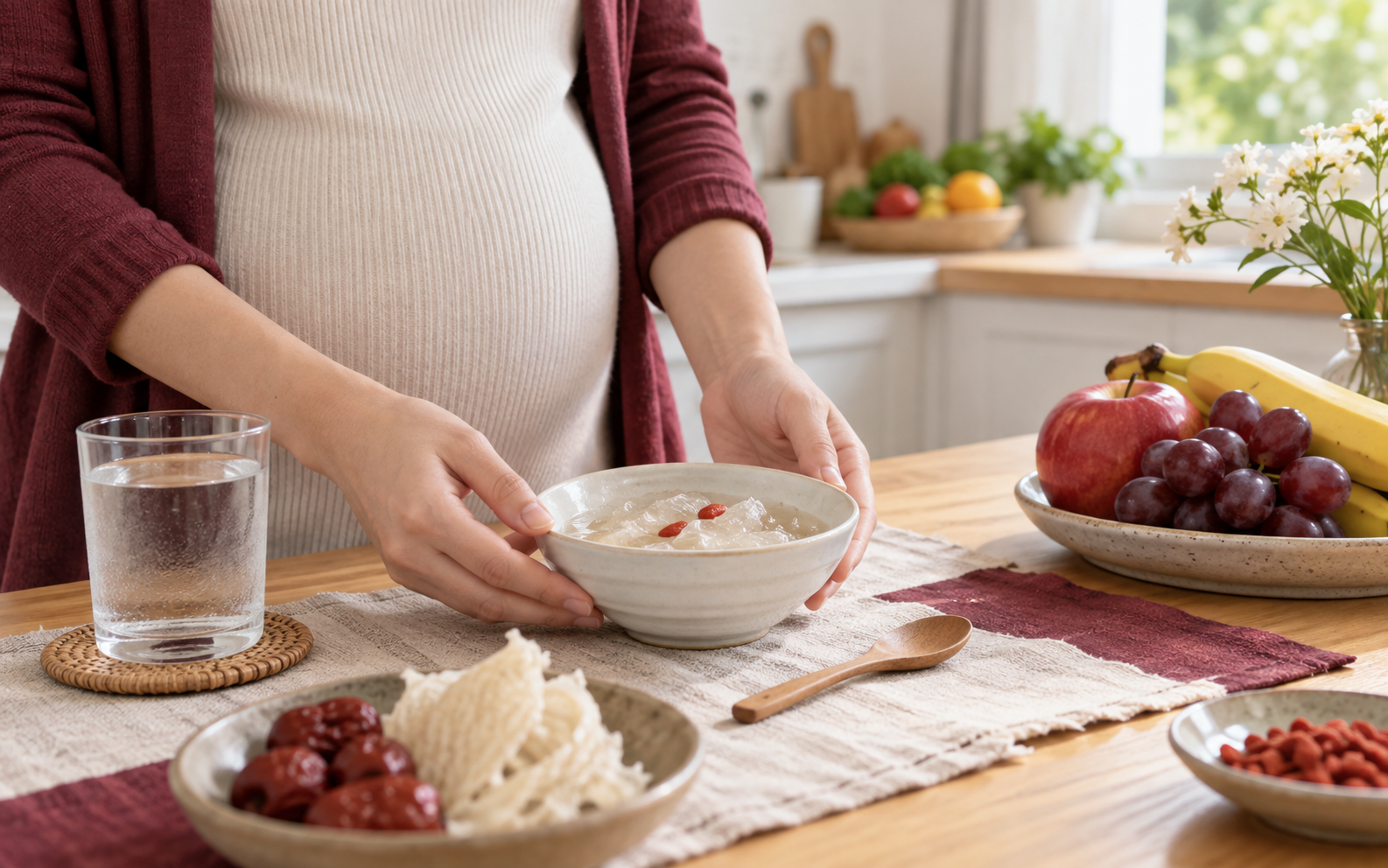
Pregnancy research on bird’s nest is mainly animal-based. Learn what is known, what is not proven and how to choose it safely as food.
Bird’s nest is traditionally eaten during pregnancy in parts of Asia, but tradition and scientific proof are not the same. Research from Malaysia and China has explored maternal bird’s nest intake in mice and rats, including offspring learning, memory and skin-related outcomes. These are animal experiments; they do not prove the same benefits in pregnant women or babies.
At present, there is not enough human pregnancy evidence to say that bird’s nest improves a baby’s intelligence, immunity or skin tone, prevents pregnancy complications or produces a better pregnancy outcome. It should be treated as a food, not a prenatal supplement or medicine. A balanced pregnancy diet and prescribed prenatal nutrients remain more important.
If a pregnant woman enjoys bird’s nest and her obstetrician has no objection, choose a properly processed product with clear ingredients, sensible sweetness, safe storage and reliable handling. Do not eat it if there is a previous bird’s nest allergy. Seek urgent help for breathing difficulty, facial swelling or widespread hives.
Evidence note: The pregnancy-related studies discussed here used animals. They support further research, not human pregnancy health claims.
Put established pregnancy nutrition first
Bird’s nest should sit behind the basics of pregnancy care: regular antenatal appointments, a varied diet, safe food handling and nutrients prescribed by the healthcare team. It is not a substitute for folic acid, iron or another supplement recommended for an individual pregnancy. Appetite, nausea, gestational diabetes and other conditions can change what is practical, so food decisions should be reviewed when circumstances change.
Read animal research with care
Animal studies help researchers explore possible mechanisms and decide whether human research is worth pursuing. They do not show that the same dose, metabolism or outcome applies to pregnant women. Look for human studies with appropriate comparison groups before accepting a pregnancy claim. Product advertising should not turn an observation in mice or rats into a guarantee about a baby’s intelligence, complexion, immunity or long-term health.
If choosing bird’s nest as food
Select a properly processed product with a clear ingredient list, serving information, sweetness and storage instructions. Check the seal and expiry date and avoid it after a previous reaction. A small food serving is different from a concentrated supplement, and more is not automatically better. If the pregnancy is high risk, a prescribed diet is in place or there is uncertainty about an ingredient, ask the obstetrician or dietitian before eating it. Personal enjoyment is a reasonable purpose; a guaranteed pregnancy outcome is not.